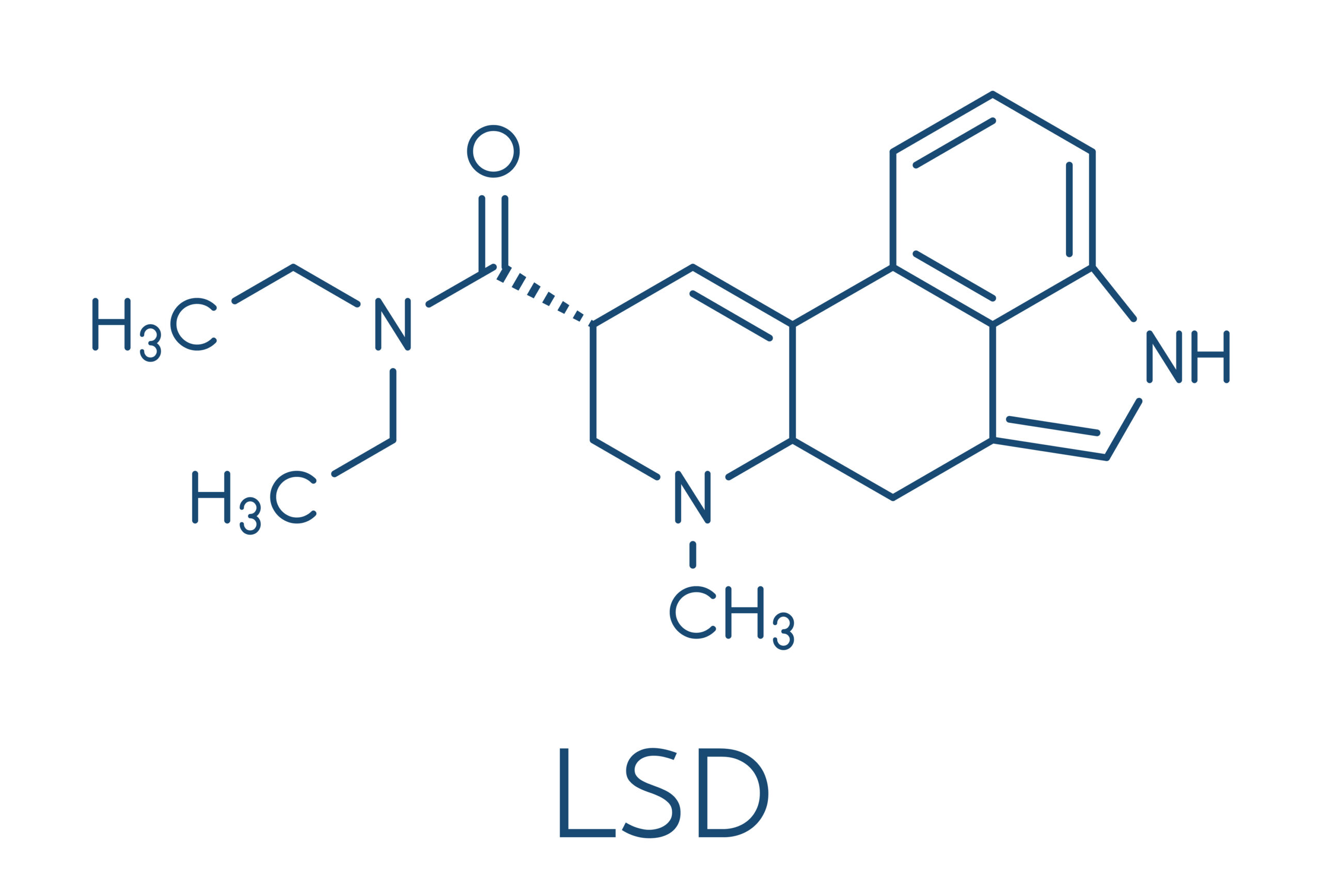
Young adults may be at highest risk for the non-medical use of hallucinogens, such as LSD or psilocybin (“shrooms”), which can result in negative health consequences. Given the changing legal and medical landscapes surrounding hallucinogens in the US, this study examined trends in hallucinogen use among young adults from 2018 to 2021.
WHAT PROBLEM DOES THIS STUDY ADDRESS?
Hallucinogens, also known as “psychedelics”, are a class of drugs that can alter people’s perceptions and sensations. They have been used both recreationally and medically, including to address alcohol use disorder and other types of psychiatric disorders. Yet, the non-medical use of hallucinogens, that is using them without the direction of a doctor, is associated with several increased risks. These include, but are not limited to, substance use disorder, mental health symptoms or disorders, as well as increased self-harm and injury. The changing legal and medical landscapes, and corresponding positive societal messaging surrounding hallucinogens are likely to reduce perceptions of harm and/or increase perceptions of benefits.
Young adults may be at increased risk for the non-medical use of hallucinogens and its associated consequences because experimentation with drugs often occurs during this period of human development in Western cultures. Research examining hallucinogen use over time in this age group can help inform public health recommendations across prevention, treatment, and recovery services.
This study examined trends in hallucinogen use among young adults from 2018 to 2021 to understand whether the prevalence of hallucinogen use increased, and if so, if it differed between types of hallucinogen use, by comparing the use of LSD and non-LSD hallucinogens. The study also examined whether there were differences in trends of use by sex, race, and parent education status.
HOW WAS THIS STUDY CONDUCTED?
This was a longitudinal cohort study among young adults aged 19–30 years from the US general population. It was a subset of high school graduates who completed the Monitoring the Future study as a 12th grader. Participants who are selected for this longitudinal panel each year are randomly assigned to begin follow-up at either 19 or 20 years of age and are interviewed every 2 years up until age 30. This study examines hallucinogen prevalence from 2018 through 2021. Participants within each calendar year (2018, 2019, 2020, and 2021) were a mix of individuals who were new to the panel and those who were invited as part of the 2-year follow-up sequence; thus ages 19-30 are all represented in each calendar year.
Response rates were approximately 35% – meaning for a given year, only 1/3 of those invited to participate ultimately completed that year’s assessment. The research team used a statistical technique to adjust estimates in such as way that accounts for the likelihood of completing an invited assessment (i.e., “selection biases”) – to calculate unbiased estimates for the entire US population. While this is a commonly accepted approach in epidemiological research to account for likelihood of participating in the assessment vs. not, those who did not complete assessments despite having been invited – and their corresponding characteristics (e.g., psychosocial challenges) – may not be represented as well in the study findings.
The primary outcomes were (1) past 12-month self-reported use of lysergic acid diethylamide (LSD) and (2) hallucinogens other than LSD (e.g. ‘shrooms’/psilocybin or PCP (phenylcyclohexyl piperidine). For each hallucinogen group,the authors examined both the prevalence of use overall and the frequency of its use only among those who used a hallucinogen. They analyzed whether prevalence and frequency differed by sex (male and female), race (white, black, Hispanic, Asian, and other), and socioeconomic status (defined as whether or not at least one parent had a college education).
There were 11,304 participants, with an average number of 1.46 further assessment timepoints during the 4-year window. Of this sample, approximately 52% were females.
WHAT DID THIS STUDY FIND?
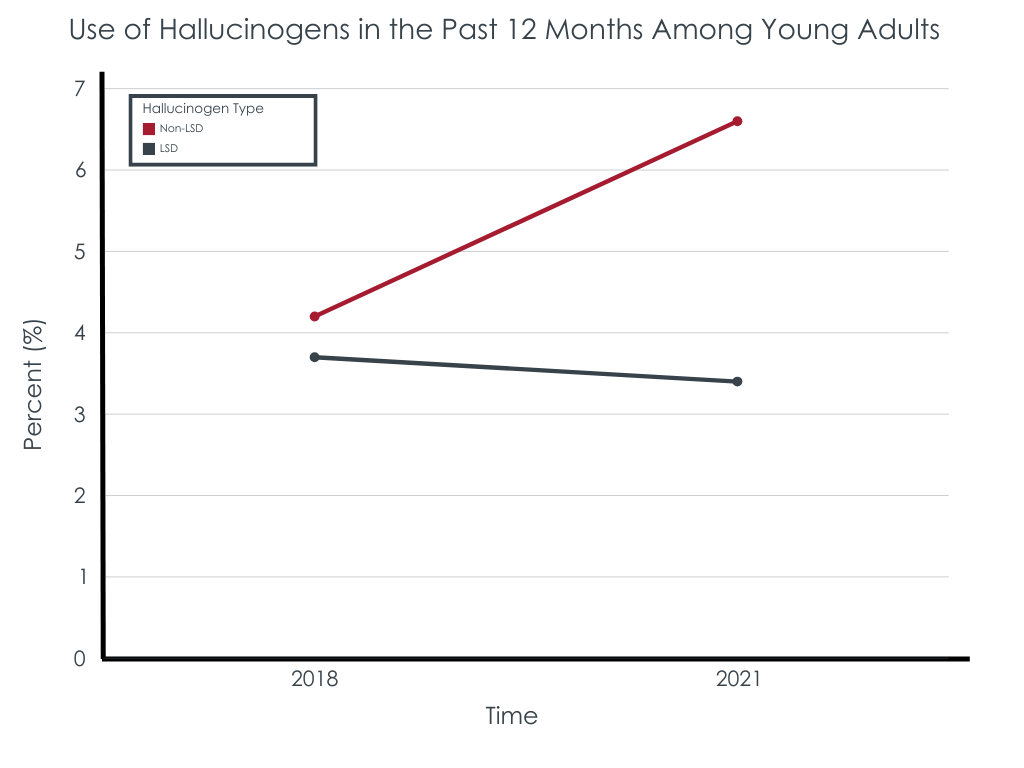
LSD use did not change while non-LSD hallucinogen use nearly doubled
From 2018 to 2021 the past 12-month use of LSD among young adults in the US remained relatively unchanged. It went from 3.7% in 2018 to 4.2% in 2021, which was not an increase beyond what would be expected by chance. Non-LSD hallucinogen use increased in prevalence by nearly doubling. It went from 3.4% to 6.6% from 2018 to 2021.
Among only those with any non-LSD hallucinogen use in a given year, the frequency increased overall and did not differ by gender. Yet, these data suggest that despite increasing hallucinogen use among young adults, it is still an infrequent occurrence: participants who used non-LSD hallucinogens in the year prior did so on average 2-3.5 times. The frequency of LSD use declined among females but not males.
Compared to females, the odds of non-LSD use were 1.9 times higher for males, and compared to black individuals, 3.4 times higher for white participants. Also, compared to youth with non-college educated parents, odds of non-LSD use were 1.25 times greater in youth with college educated parents. These patterns were similar for LSD use.
WHAT ARE THE IMPLICATIONS OF THE STUDY FINDINGS?
Understanding the current trends of hallucinogen use among young adults and whether there are changes in the use of hallucinogens among this population is necessary to understand how shifting legal landscapes and sociocultural messaging surrounding hallucinogens may be associated with changes in use. Correspondingly, increases in hallucinogen use across this age group at the national level should inform corresponding increases in exposure to the potential risks posed by hallucinogens and the need for clinical and public health responses.
This study measured hallucinogen use among over 11,000 young adults. It should be noted, however, that response rates were about 35% across all assessment years. While the researchers used statistical methods to try and adjust for any biases related to these low follow-up rates, some biases in the estimates may still be present. However, given that those with more problem patterns of substance use are typically more likely to discontinue these kinds of studies, any biases remaining here may actually lean toward conservative estimates with real rates possibly higher.
Overall, the study found that although LSD use did not increase much in a recent 4-year period, non-LSD hallucinogen use almost doubled. As well, males, white individuals, and individuals with a college educated parent were more likely to use hallucinogens. While some point to the potential therapeutic benefits of hallucinogen use, on balance these studies to date show that individuals who choose to use hallucinogens have higher levels of well-being than those who do not choose to use hallucinogens. At the same time, other studies show that young adults who use hallucinogens have worse functioning than their peers who do not use hallucinogens. Importantly, experimental studies testing the impact of hallucinogen use on a person’s functioning in popular forms (e.g., by “microdosing”) show no benefits over placebo, suggesting any associations with positive well-being may be driven by other factors rather than the drug’s active ingredients.
Overall, examining hallucinogen use is a timely issue as, similar to what has happened with cannabis, there has been a shifting landscape of hallucinogen use: some hallucinogens, such as psilocybin, have been approved for therapeutic use for some psychological health issues and are being studied in clinical research. Like cannabis, which has been approved for medical use and recreational use has been either decriminalized or legalized across the US, there could be major unintended public health consequences of increased access to hallucinogens through policy changes and general cultural acceptability of its use, especially for young people. For example, recreational cannabis legalization for adults increased the likelihood of youth cannabis use and subsequent cannabis use disorders among youth. Like cannabis policy, increased access and reductions in perceived harm may impact emerging adults (e.g., 18-24 years) more than adolescents given the greater autonomy – but continued brain development – associated with this life stage. Daily cannabis use is also on the rise nationally, despite the health harms of daily use. In sum, the findings from this study can contribute insights to inform public health strategies, intervention programs, and policies aimed at mitigating potential harms associated with hallucinogen use among young adults. Understanding hallucinogen use trends among young adults should align with broader efforts to balance medical research on potential therapeutic benefits with the need to manage and minimize risks related to non-medical use of these substances.