

Adolescence is a critical period for the onset of substance use. It is important to understand why some youth engage in problematic substance use, especially youth who are most vulnerable. This study examined the unique contributions of impulsivity and stressful life events on problematic substance use among youth.
WHAT PROBLEM DOES THIS STUDY ADDRESS?
Adolescence is a critical period for the onset of substance use and is an ideal time for early intervention efforts aimed at preventing more problematic substance use and its consequences. Adolescents who engage in problematic – that is, heavy and frequent – substance use, experience a variety of negative consequences for their physical health, cognitive development, relationships, and future prospects. Identifying the risk factors that lead to this behavior, and potential avenues for intervention, is crucial.
There are many risk factors for problematic substance use including a lack of parental supervision, social groups that engage in substance use, experiences of trauma, underlying mental health issues, or a genetic predisposition. Experiences of stressful life events and individual traits such as impulsivity (a cognitive process related to poor self-regulation or “leaping before you look” instead of “looking before you leap”) are both associated with substance use. When stress and impulsivity have been examined on their own, they have some relationship to adolescent substance use initiation, treatment, and recovery. Yet, there has been limited research that considers both factors together, and the results have been inconsistent. This study examined the relationship between impulsivity, stress, and substance use in adolescents, with a focus on youth who are particularly vulnerable to substance use and its negative consequences: youth considered at-risk as they are struggling with meeting developmental goals (e.g., finishing school).
HOW WAS THIS STUDY CONDUCTED?
This was a cross-sectional study of 205 youth who were enrolled between fall 2016 and fall 2017 in a military-style residential program for at-risk youth located in Mississippi. The program is voluntary and is part of a nationwide network of 40 federally funded sites. Youth who are considered at-risk and eligible for the program are youth who are unemployed and have dropped out of school or are significantly behind in their grade level. The program aims to increase the number of youth earning a GED and working on further education (i.e., college), becoming employed, or joining the military. The program lasts 5 ½ months and offers high school and college courses, vocational training, physical training, and discipline.
In this study, the primary outcomes were the frequency of lifetime alcohol and cannabis use and consequences related to use (e.g., problems at school) and the use of one versus more than one substance. These “lifetime” outcomes were for the period before they had entered facility. The two key predictors used in this study were different aspects of (1) impulsivity (i.e., negative urgency, positive urgency, premeditation, lack of perseverance, sensation seeking) and (2) any of 76 stressful events experienced during their lifetime. Some example stressful life events were the death of a family member, financial difficulties, or problems at school: youth were not asked about physical or sexual abuse. The analysis first examined the independent association of the outcomes with impulsivity and then examined whether adding stress to the model increased what the model could suggest about key contributors to heavy substance use.
Youth in this study were between 16-19 years old, mostly male (82%), and almost two-thirds were white (63%). Of the 205 participants, 95% had dropped out of school and the remaining had left school intentionally. Most youth (70%) reported having drank alcohol in their lifetimes and just over two thirds (68%) reported using less than once a week; 60% reported using cannabis in their lifetime, and of those, about two thirds (67%) reported using more than once a week.
WHAT DID THIS STUDY FIND?
Impulsivity and stress related to heavier substance use and related consequences.
Higher impulsivity on its own was associated with higher-frequency alcohol use, and the sensation-seeking aspect of impulsivity, or looking for excitement, was the most salient. Yet, when stress was added to the model, it had the strongest association with alcohol use and impulsivity was no longer significant. When examining the consequences of alcohol use, only impulsivity was related to worse consequences; however, this analysis did not account for the level of alcohol use, which is a strong contributor to consequences.
Similar to alcohol use, higher impulsivity was linked to higher cannabis use, and the negative urgency aspect of impulsivity, or acting to avoid negative experiences, was the most salient. When stress was added to the model, both stress and impulsivity had moderate associations with cannabis use. When examining the consequences of cannabis use, both impulsivity and stress were related to worse consequences; however, this analysis did not account for the level of cannabis use, which is a strong contributor to consequences. Finally, the sensation seeking aspect of impulsivity and higher stress were associated with the use of multiple substances.
The overall models only explained a small portion of the key contributors to substance use and the magnitude of the individual relationships were small, indicating there are other important factors in addition to impulsivity and stress associated with substance use and related consequences.
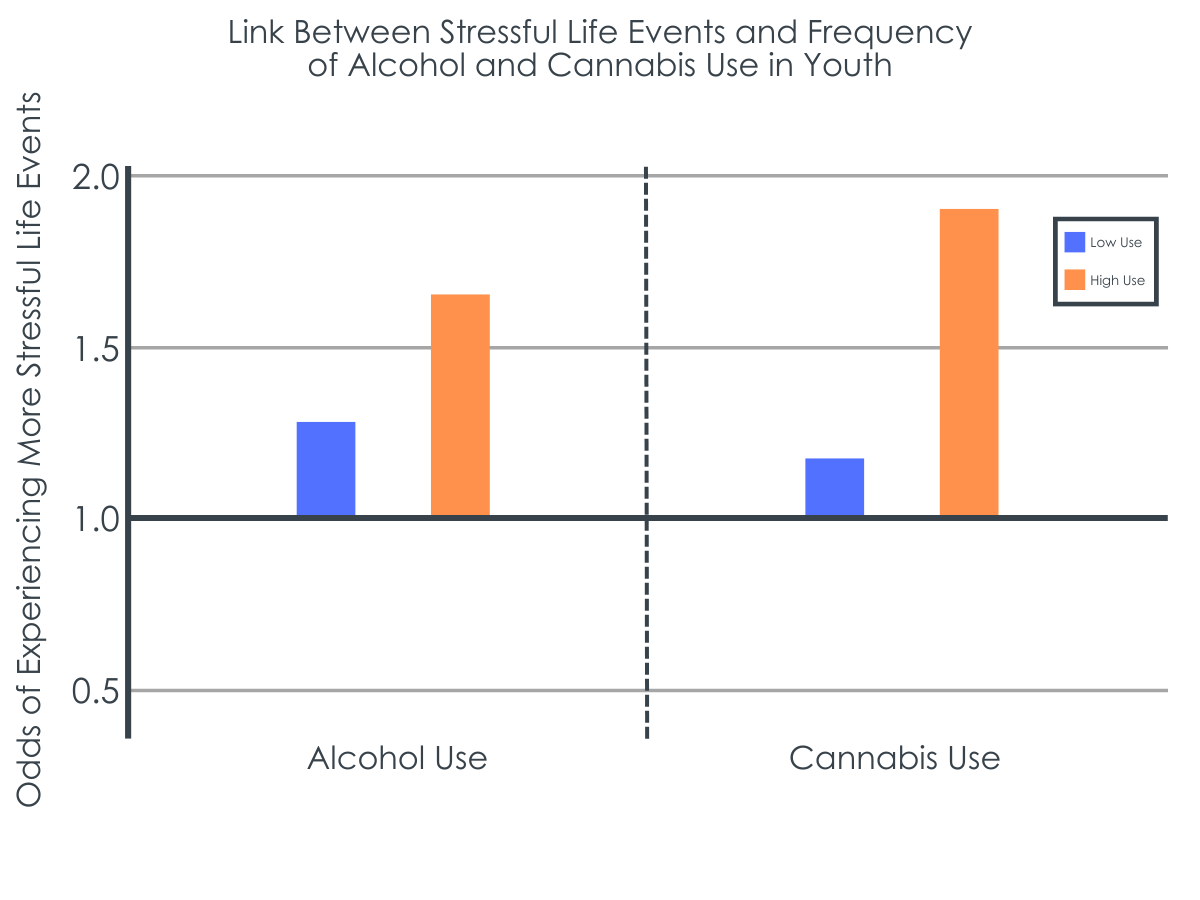
Figure 1. Odds ratios essentially indicate the likelihood of something occurring, where an OR above 1 means that it is more likely occur. For example, in this study, adolescents with low use of alcohol and cannabis were more likely to report more stressful life events compared to adolescents with no use, and those with high use were more likely to report more stressful life events than those with low use.
WHAT ARE THE IMPLICATIONS OF THE STUDY FINDINGS?
This study of at-risk adolescents demonstrated the unique relationship between both individual impulsivity and a history of stressful life events on substance use behaviors and consequences.
When lifetime stressful experiences were examined, they emerged as the primary contributor of increased alcohol use frequency. This suggests that a history of a stressful event may have a stronger influence on alcohol use frequency (or vice versa) than impulsivity traits in at-risk adolescents. However, stressful life events and negative urgency were both predictors of cannabis use frequency suggesting they are of similar importance to understanding heavy cannabis use among at-risk youth. The study also highlights that there are potentially different aspects of impulsivity related to the use of different types of substances: sensation seeking, or looking for excitement, was more strongly linked to alcohol use, while negative urgency, or avoiding negative experiences, was more strongly linked to cannabis use. This finding suggests that distinct personal traits were differently related to the use of each substance.
This study indicates that both individual trait differences, notably, sensation seeking and negative urgency, as well as environmental stressors may contribute to problematic substance use in at-risk adolescents. Given the cross-sectional nature of this study, however, the opposite may also be true. The findings demonstrate that it is important to tailor interventions to address the specific needs and substance use patterns of vulnerable youth, as the factors contributing to their substance use behaviors can vary significantly. Overall, the study highlights the complex interplay of personal characteristics and environmental factors in shaping substance use behaviors, and they underscore the need for targeted, multifaceted interventions to address the specific needs of at-risk youth.